


According to a survey by the Heidelberg Institute for Energy and Environmental Research (Bergk et al. 2022), the monthly costs per parking space in large and small cities alone range between €104 and €193. Extrapolated over the year, this amounts to between €1,248 and €2,316 per parking space. For a parking lot with 100 parking spaces, this can amount to up to €231,600 per year. The same report states that typically only about 11 percent of the costs mentioned can be offset by charging parking fees. In our example of a parking lot with 100 spaces, this amounts to $25,476. This leaves annual costs of $206,124 uncovered.
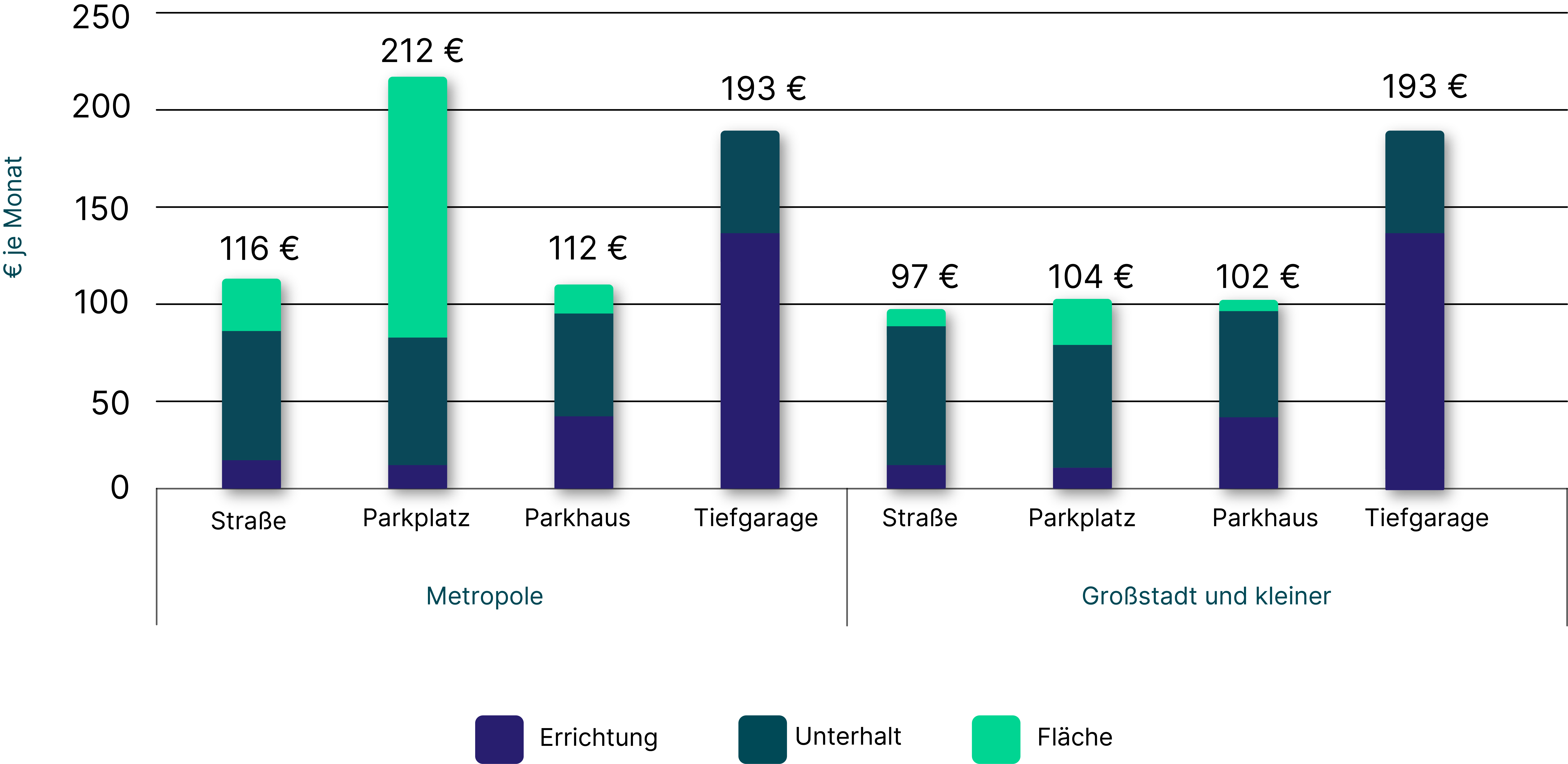
Sample calculation for a parking lot with 100 parking spaces, extrapolated to a year:
- Annual cost per parking space: $193 * 12 months = $2,316
- Total annual costs for 100 parking spaces: $2,316 * 100 = $231,600
- Can be offset by parking fees collected: 11% * €231,600 = €25,476
- Other total annual costs: €231,600 - €25,476 = €206,124
These figures show that owners need to find ways to reduce the running costs associated with their parking spaces while efficiently exploiting their full revenue potential. In this blog, we show you where parking space management costs time and money and how you can easily change this.
Where parking space management costs time and money
Anyone who owns parking space knows that a lot of organization goes into every parking lot. Especially where many different user groups come together, the effort and costs quickly add up. The biggest cost drivers are always the same:
Would you like to reduce the effort and costs associated with your parking space?
ContactLet us advise you!- Parking space control
Not everyone who parks should be allowed to do so. Without regular monitoring, your parking area will quickly fill up with unauthorized parkers, and the actual users, such as customers or employees, will spend a long time looking for a parking space. In the worst case, they won't find one. But monitoring means effort: you need staff or a technical system. This makes it all the more important that monitoring works seamlessly, because only then will your area remain free of unauthorized parkers.
- Parking space management
Those who actively manage their space can often generate significantly more revenue, which noticeably reduces running costs—but many are not yet exploiting this potential. The reason: charging parking fees is often complicated and time-consuming.
- Management of parking permits
Most parking spaces are used by many different groups: customers, employees, suppliers, service providers—some should park for free, others at reduced rates, and still others at regular rates. That sounds simple, but it involves a tremendous amount of administrative work: issuing permits, managing employee ID cards, assigning rates.
- High costs and manual effort due to traditional parking systems
Control, management, and parking permits require a system, and traditional solutions are usually expensive, complex, and inflexible:
- Personnel-based systems such as ticket allocation or checks require permanent staff on site. You either hire additional staff or tie up capacity from your core business. Both are inefficient, prone to errors, and do not guarantee 24/7 monitoring. The result: gaps in monitoring, leading to unauthorized parking, non-payers, and annoyance.
- Barrier systems enable continuous management without additional personnel, but they are expensive to purchase, require intensive maintenance, and are prone to malfunction. If the barrier fails, the parking lot suddenly becomes uncontrolled and valuable revenue is lost. Except for employee ID cards, parking barriers do not offer an efficient way to offer different user groups individual parking rates.
- Ground sensors, on the other hand, are technically sophisticated and expensive, as each individual parking space requires its own sensor. They are constantly exposed to weather conditions and stress (vehicles driving over them). Although they can detect whether a parking space is occupied, they cannot be used to collect parking fees or automatically track parking violations. The latter remains the responsibility of your staff.
- communication effort
"I've lost my employee parking permit." – "How long can I park here for free?" – "Have I really parked too long?"
You receive such requests every day by phone, email, or in person. Especially with large areas and many users, this results in a constant communication effort that ties up valuable resources.
- Ongoing operating costs
Whether it's an underground garage, multi-storey car park, or outdoor parking area, certain costs are always incurred. These include:
- Building maintenance and lighting for parking garages and underground parking lots
- Repair of road damage, markings, or potholes
- Garden maintenance for outdoor facilities
- Electricity costs for lighting
These costs are difficult to avoid, even with an efficient parking system for control and management. This makes it all the more important to reduce all avoidable additional costs in parking space management.
How digital parking space management provides a solution
Digital parking systems using license plate recognition (ANPR/ALPR) come into play precisely where traditional parking space management reaches its limits. They reduce manual effort, ensure 24/7 control, and enable management that is efficient, flexible, and economical at the same time. This is how digital parking space management provides a solution:
- Seamless, reliable parking space monitoring—without any staff
The license plate scanners of digital parking systems automatically record every vehicle entering and leaving the parking area, 24/7, 365 days a year, in all weather conditions. This means that your parking area is monitored continuously and reliably.
- Efficient and simple management
With digital parking space management, administration becomes a breeze: parking times are recorded seamlessly and automatically, the license plate serves as a parking ticket, and parking fees can be conveniently paid using various payment methods (at the parking meter on site, with a smartphone, etc.). Monthly billing is also largely eliminated, as this is handled by the provider of the digital parking system.
- Flexible allocation and management of parking permits
Another advantage is flexibility. Digital solutions enable individual rules and parking rates for different user groups. You can either assign these parking permissions yourself with just a few clicks in our online dashboard or allow your parkers to activate themselves independently via verification. Everything is done via the license plate—quickly, transparently, and with minimal administrative effort.
- No more expensive, failure-prone systems
In addition to reducing your organizational workload, a license plate-based parking system also saves you money on acquisition and ongoing operating costs. Many providers—such as Peter Park cover the entire cost of the hardware. The usual expenses for maintenance, repairs, and malfunctions are also largely eliminated. Cameras and software are low-maintenance, scalable, and reliable, keeping running costs to a minimum.
- Less communication effort
Most typical queries are resolved automatically with digital parking management. Lost parking permits, for example, are no longer an issue—the license plate serves as clear authorization, without the need for physical proof. In addition, the provider of the digital parking system usually acts as the point of contact for parkers. This means that questions are automatically directed to them and no longer to you. This significantly reduces your communication workload.
Reduce costs, generate real added value
Parking spaces continue to be a significant cost factor for companies—but that can change. License plate-based parking systems automate key processes, reducing effort and costs and offering many other advantages. Companies that opt for a digital solution today can turn their parking spaces into a real asset—efficient, stress-free, and profitable.
Bergk, F., Schreiner l. & Dünnebeil, F. (2022). Costs of parking space. Institute for Energy and Environmental Research Heidelberg (ifeu), summary of ad hoc consultation for the Baden-Württemberg Ministry of Transport, online at https://www.klimaschutz-bewegt.de/wp-content/uploads/02_Kosten_Parkraum_ifeu_Zusammenfassung.pdf [accessed on 28 November 2025].


.png)
